Industrial Automation
Why Connector Failures Often Start with Choosing Local Alternatives
In industrial automation, connector failures rarely begin with a design mistake. More often, they start with a well-intended decision to use a local or low-cost connector alternative. On paper, the specifications look comparable. The ratings match. The form factor fits. The price appears attractive.
However, once the machine enters real production conditions, the reality changes.
This is where many manufacturers, system integrators, and panel builders learn a hard lesson about long-term reliability.

The Hidden Risk Behind Local Connector Choices
At first, local connectors may perform adequately during testing or early commissioning. However, over time, common issues begin to surface.
For instance, engineers notice loosening contacts caused by vibration. Seals start degrading when exposed to dust, oil, or humidity. Locking mechanisms lose consistency after repeated mating cycles. Consequently, what seemed like a minor component choice leads to intermittent faults and unplanned downtime.
Moreover, these failures are difficult to trace. Maintenance teams spend hours troubleshooting connectors instead of focusing on process optimization. As a result, production losses quietly accumulate.
This challenge is especially common in environments such as automation lines, packaging machinery, robotics, energy systems, and control panels operating around the clock.
Why Industrial Environments Demand Proven Connector Design
Industrial applications place unique stress on connectors. Continuous vibration, temperature variations, electromagnetic interference, and frequent maintenance cycles test every mechanical and electrical interface.
Therefore, connector performance is not just about ratings on a datasheet. It is about consistency over years of operation.
This is where HARTING stands apart.
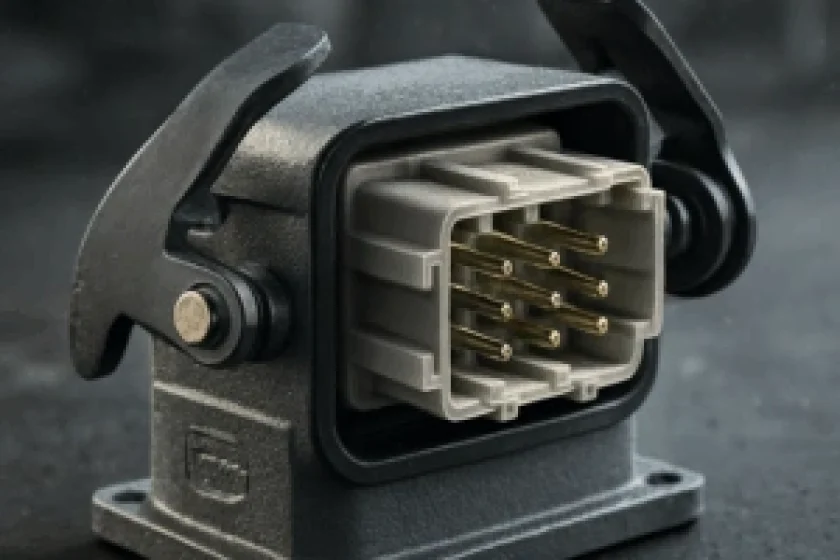
Rather than focusing only on initial specifications, HARTING designs connectors for predictable performance across long industrial lifecycles. Their approach emphasizes repeatability, secure locking, stable contact resistance, and sealing systems that maintain integrity even after extensive use.
The Cost Perspective Most Teams Overlook
Upfront savings often drive the decision to select local alternatives. However, the real cost of connectors emerges over time.
Frequent replacements, recurring maintenance, production stoppages, and spare inventory management quickly outweigh the initial price difference. Consequently, teams that prioritize reliability experience lower total cost of ownership.
In practice, consistent connector performance reduces troubleshooting time, protects machine uptime, and supports stable operations year after year.
This long-term perspective explains why many organizations eventually standardize on proven industrial connectors after facing repeated failures.
Why Omkar Systems Aligns with HARTING Connectors
Choosing the right connector is only part of the equation. Equally important is working with a partner who understands application realities.
Omkar Systems represents HARTING in India with a focus on technical guidance, application understanding, and authentic supply. The objective is not simply to deliver products, but to help customers avoid hidden risks and unexpected failures.
By aligning with a globally trusted connectivity brand, Omkar Systems supports industries in building systems designed for durability rather than short-term compromise.
Final Thoughts on Connector Selection
Connector selection is rarely about saving upfront costs. Instead, it is about avoiding uncertainty later.
When machines fail due to minor connectivity issues, the impact extends far beyond the connector itself. Reliability, uptime, and long-term performance depend on choosing components built for real industrial conditions.
Ultimately, investing in proven industrial connectors helps teams focus on productivity instead of repairs — and that difference becomes clear over time.