Industrial Automation
A machine guard is only effective when its safety system works reliably with it. One important part of that system is the interlock switch, which detects when a guard door or access panel opens and helps prevent hazardous machine operation.
However, choosing an interlock switch is not simply about selecting a switch that fits the door. The machine design, operating environment, guard movement and required safety performance all matter.
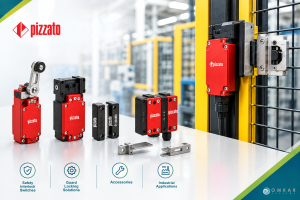
What Is a Machine Guard Interlock Switch?
An interlock switch connects the position of a machine guard to the control system. When the guard opens, the safety system can stop or prevent hazardous movement.
ISO 14119 classifies interlocking devices into four main types:
- Type 1: Mechanical, uncoded
- Type 2: Mechanical, coded
- Type 3: Non-contact, uncoded
- Type 4: Non-contact, coded
The main difference is how the switch detects and identifies its actuator.
Which Interlock Switch Should You Choose?
Mechanical Tongue-Type Switches
A tongue-type switch can work well for straightforward machine guards where the environment is relatively clean and the risk of bypassing is low.
These switches are commonly used on industrial machinery because they offer a simple mechanical solution and can be suitable for many standard guarding applications.
Coded Magnetic and RFID Switches
For applications where the guard may move slightly out of alignment, or where dust, water or frequent cleaning is present, a coded non-contact interlock switch can be worth considering.
These switches do not require a mechanical actuator to enter a slot. As a result, they can offer greater flexibility for certain guard designs.
Coded devices can also make deliberate bypassing more difficult, depending on the coding level and overall safety design.
5 Questions to Ask Before Selection
Before choosing an interlock device, consider:
- Does the guard move, sag or vibrate?
- Is the machine exposed to dust, water or chemicals?
- Is there a realistic risk of bypassing the guard?
- Does the application require guard locking?
- What Performance Level does the machine risk assessment require?
These questions help narrow down the right technology for the application.
Importantly, the interlock switch is only one part of the complete machine safety function. The safety controller, wiring, output devices and stopping performance also need to meet the required safety level.
Choosing the Right Safety Interlock
There is no single interlock switch that suits every machine. A simple mechanical switch may be appropriate for one application, while another may require a coded magnetic, RFID or guard-locking solution.
Therefore, start with the machine risk assessment and guard design, then select the appropriate safety device.
Omkar Systems is a distributor of Pizzato Elettrica safety products, including safety interlock solutions for industrial machine guarding applications. We can help identify suitable products based on the machine, guard configuration and application requirements.